
The mountain breathes
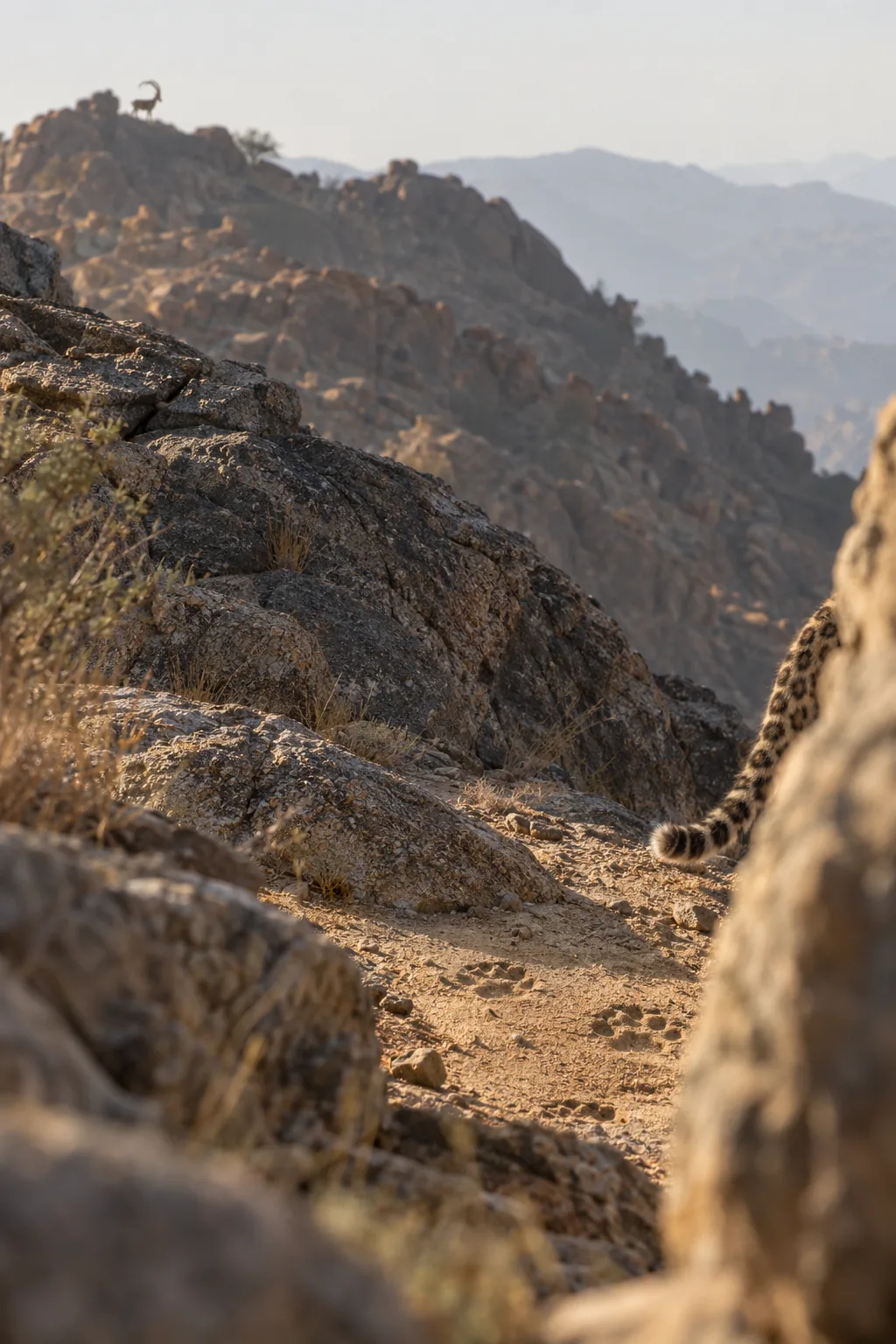
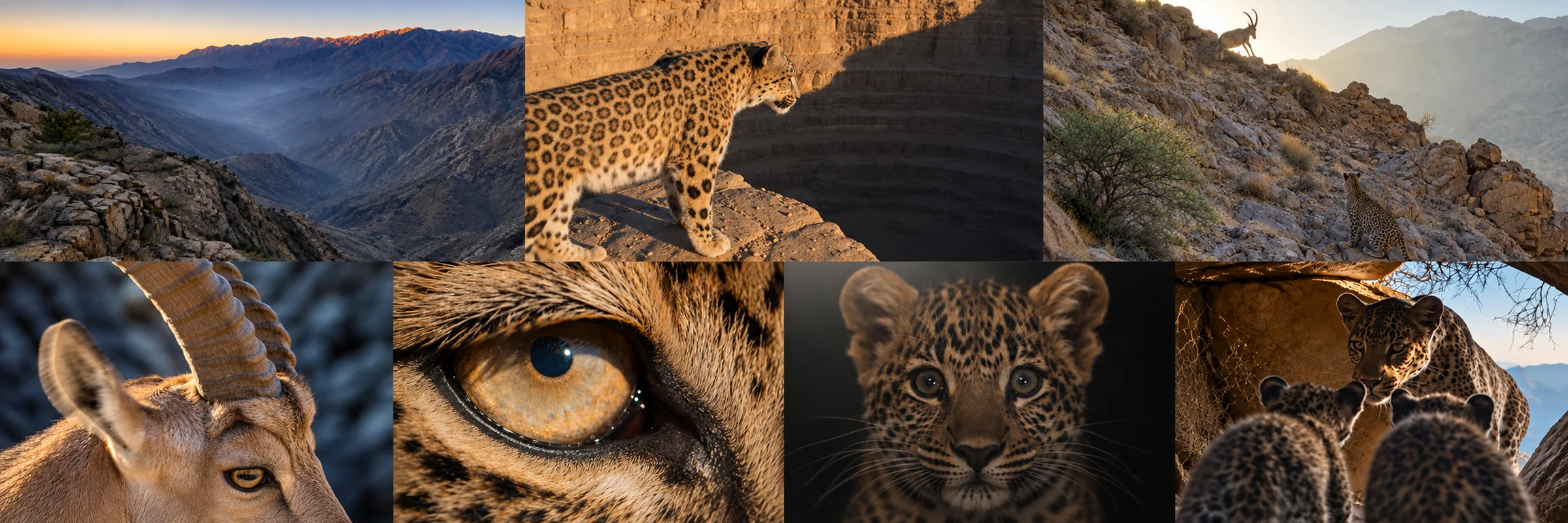
The sun drops behind the mountains and an ibex stands on the far ridge. Fresh paw prints in the sand, and the tip of a long tail slipping behind a rock.
FactThe Arabian leopard is the smallest leopard subspecies in the world.
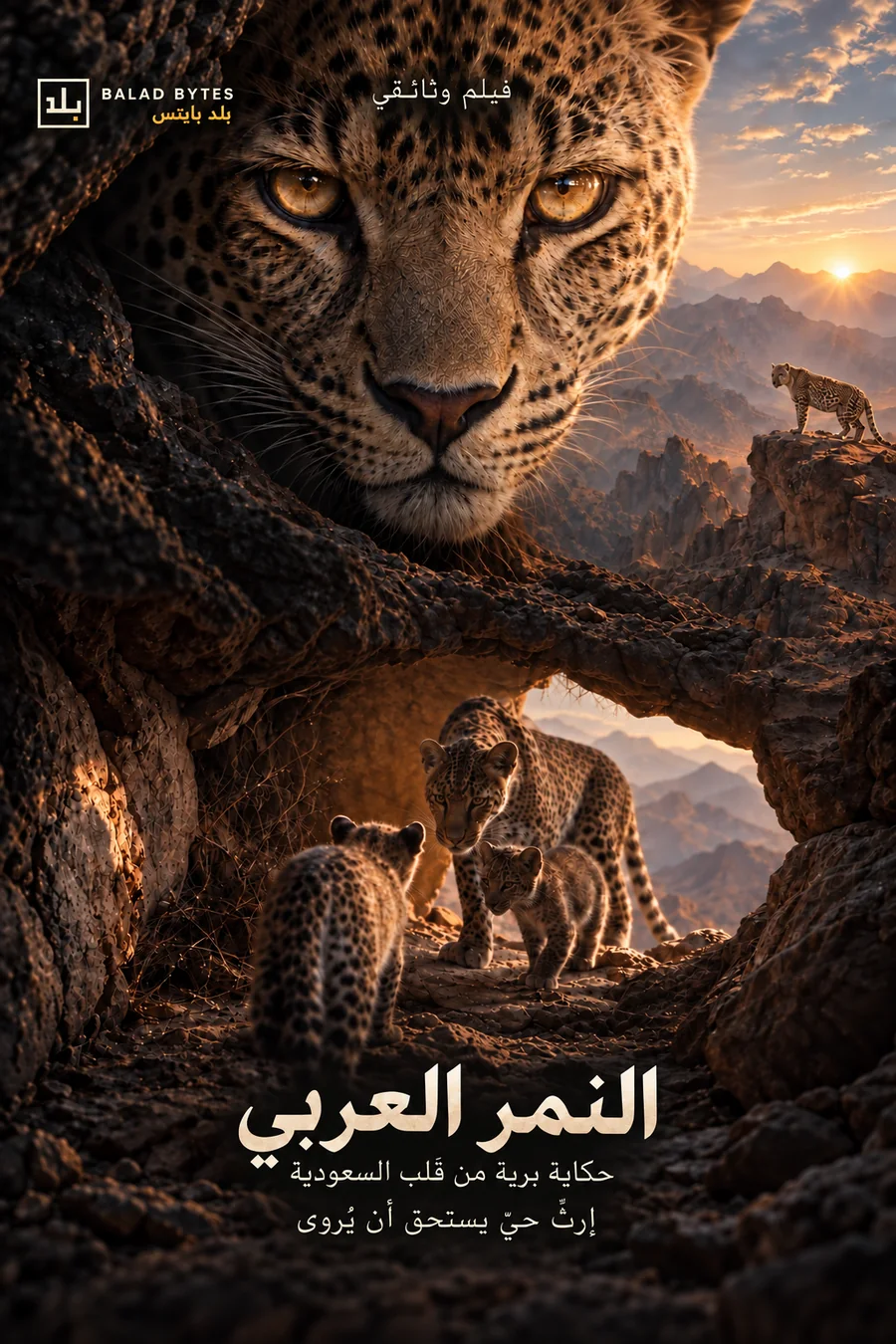
Too rare to film. Too close to forget
The Arabian leopard is classified as critically endangered. No one knows exactly how many remain in the wild; the Royal Commission for AlUla estimates about a hundred.
Filming it in its habitat is nearly impossible: a solitary, nocturnal animal that is expert at avoiding people, living in mountains no one visits. That is why there are so few images of it, and why we made this film.
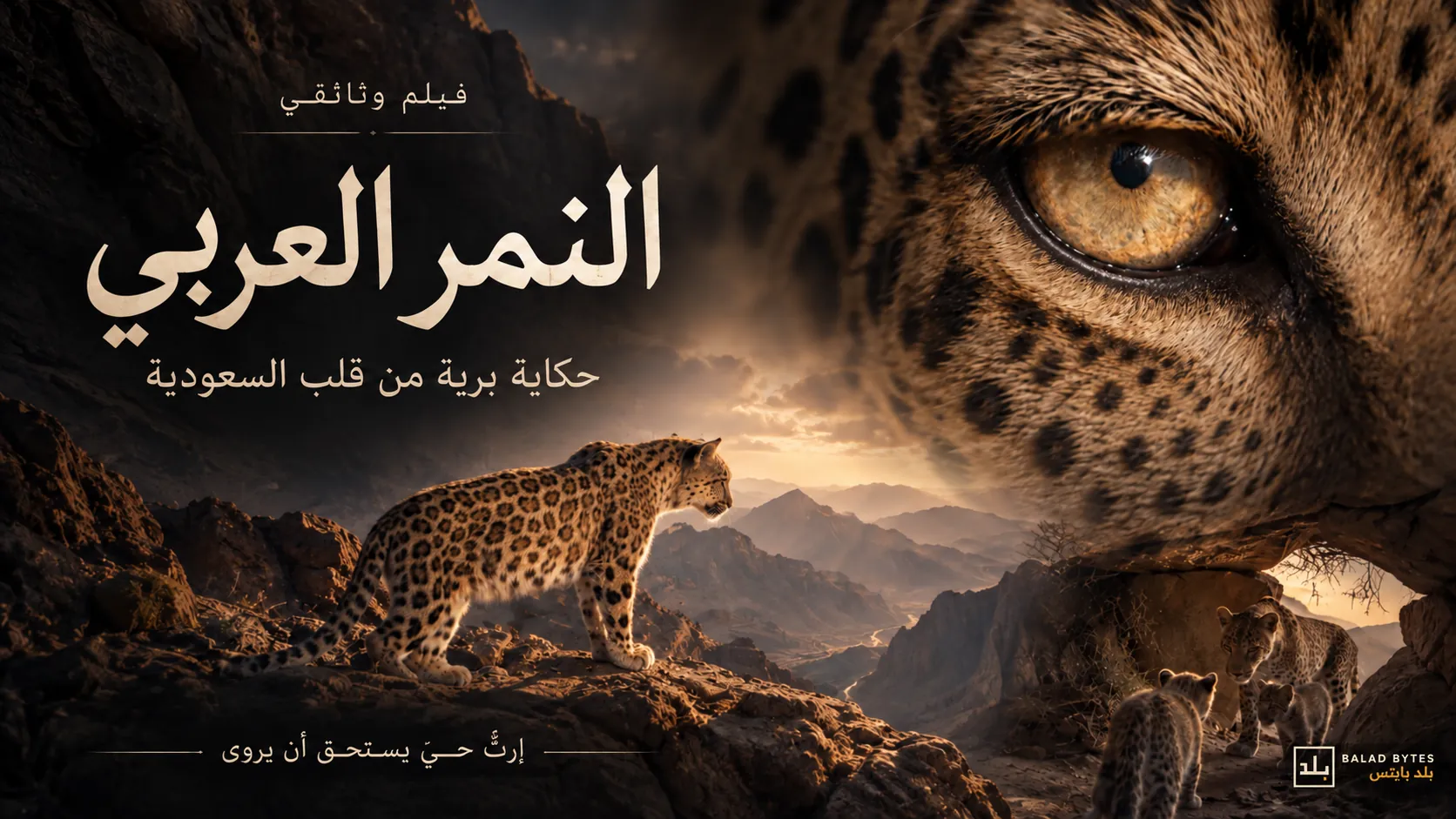
A documentary that rebuilds the Arabian leopard's world visually: the mountains it lives in, the way it hunts, a mother raising her two cubs in a cave, and what made it disappear in the first place. And it sets that beside what is being done today to bring it back: a breeding centre run by the Royal Commission for AlUla, a programme to return it and its prey to the Commission’s reserves, and an international day dedicated to it by the United Nations on 10 February.
An animal most of us have never seen, and one that deserves to be seen before it becomes a picture in a book.
One day in the life of a female leopard, from dusk to dusk.
The full film is in production. These are its chapters; durations are approximate.
About 10 minutes 20 seconds
The sun drops behind the mountains and an ibex stands on the far ridge. Fresh paw prints in the sand, and the tip of a long tail slipping behind a rock.
FactThe Arabian leopard is the smallest leopard subspecies in the world.
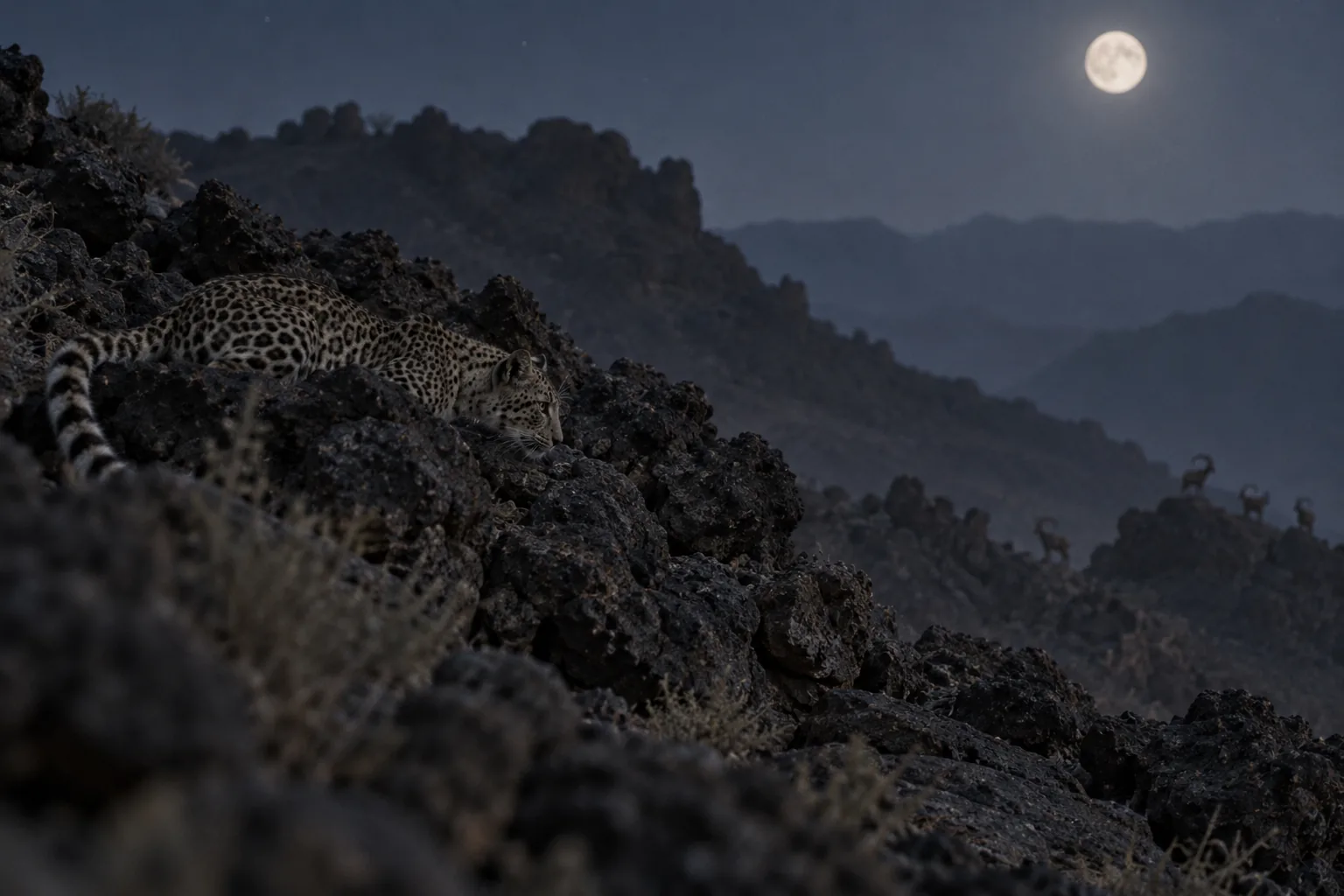
The moon rises over the black lava field, and the leopard’s hours begin. It closes in on the herd slowly, as silent as the stone beneath it.
FactSolitary and nocturnal, it feeds on Nubian ibex, hyrax and hares.
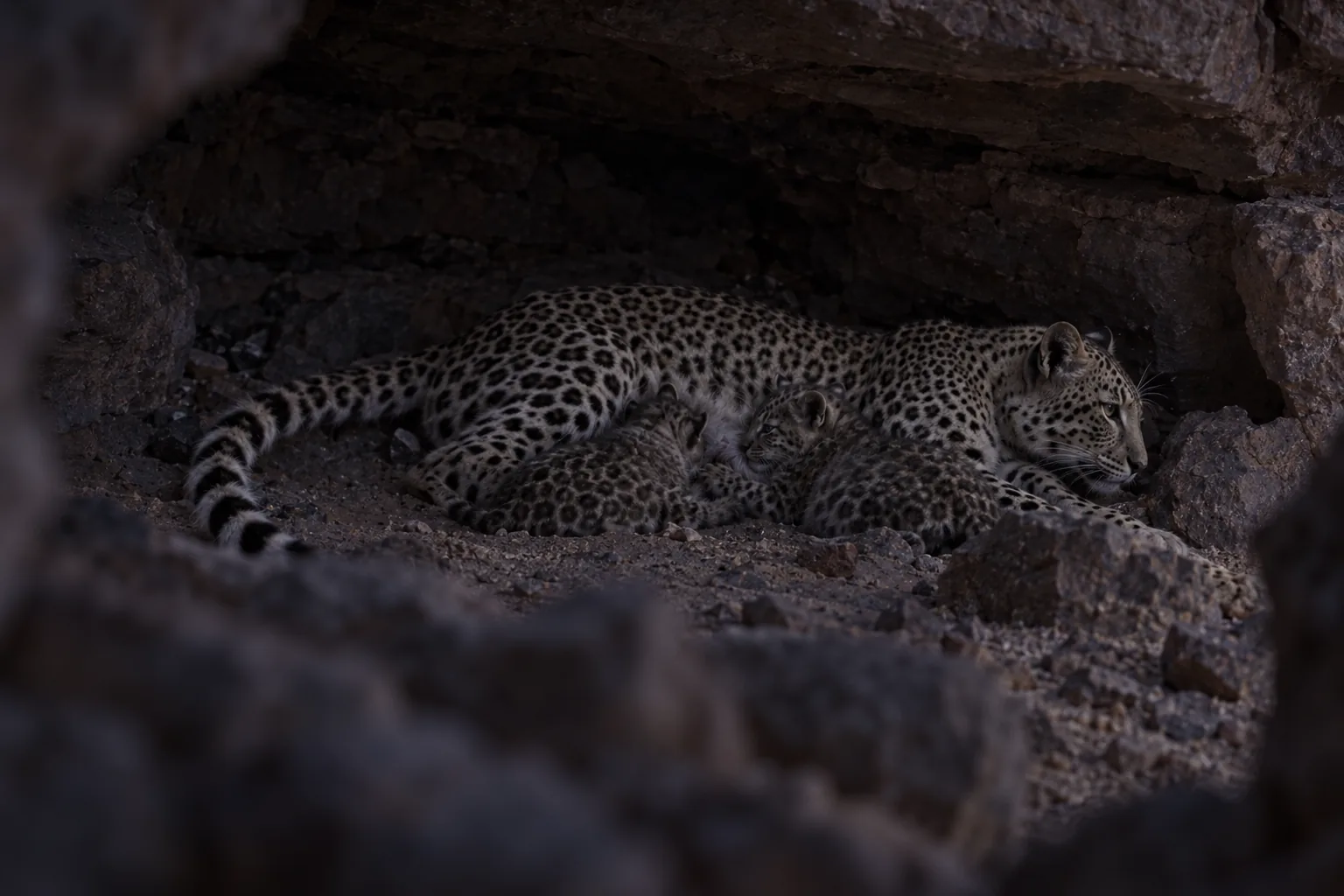
Deep in the cliff, the mother nurses her two cubs. This is where they learn the first things they will need to survive.
FactIn summer 2024 three cubs were born together in the breeding programme, a first in the Kingdom. A cub stays with its mother for about eighteen months.
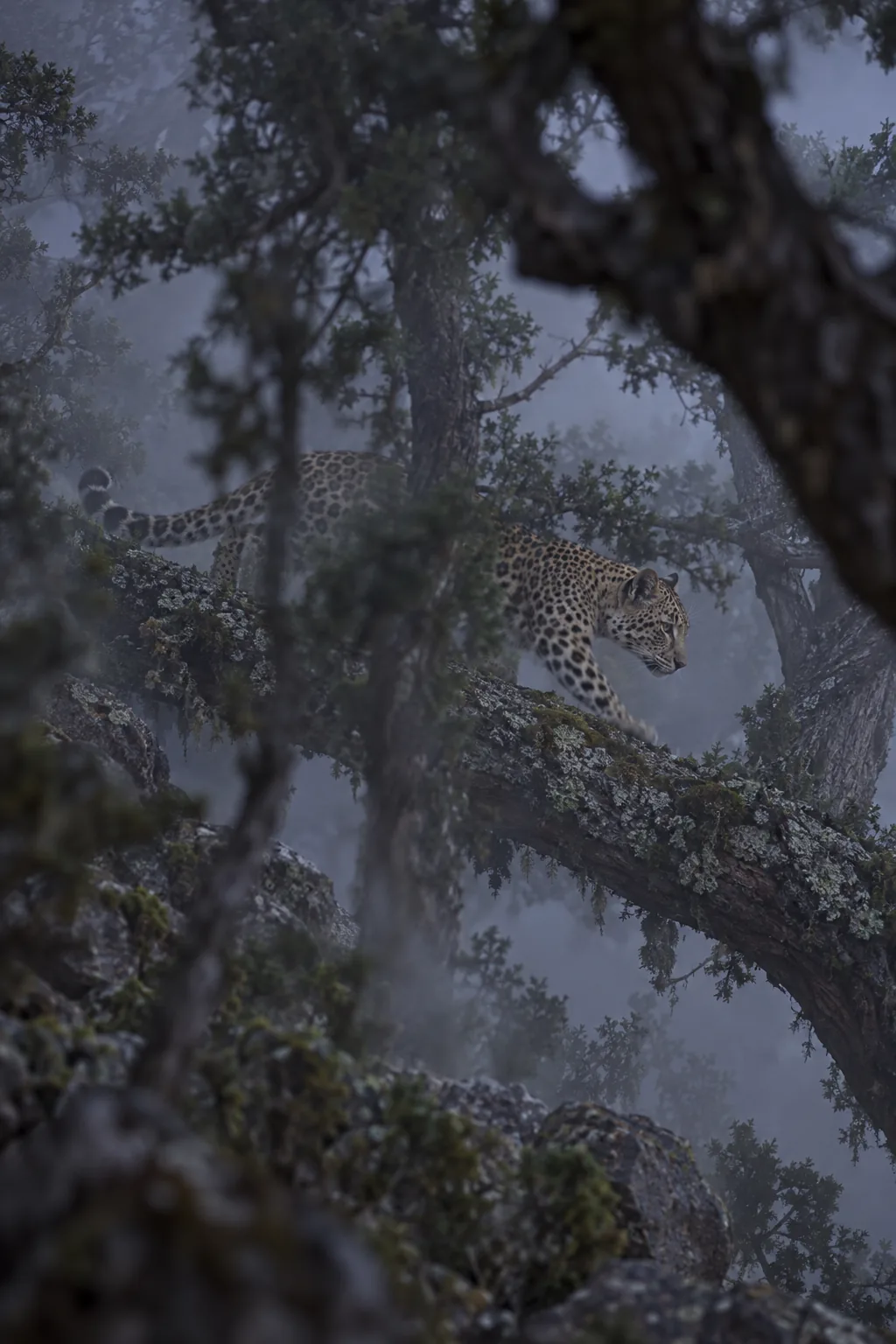
Thick fog among the ancient junipers of the Sarawat, where the leopard lived for a long time before it vanished.
FactThe Sarawat mountains were part of its historic range.
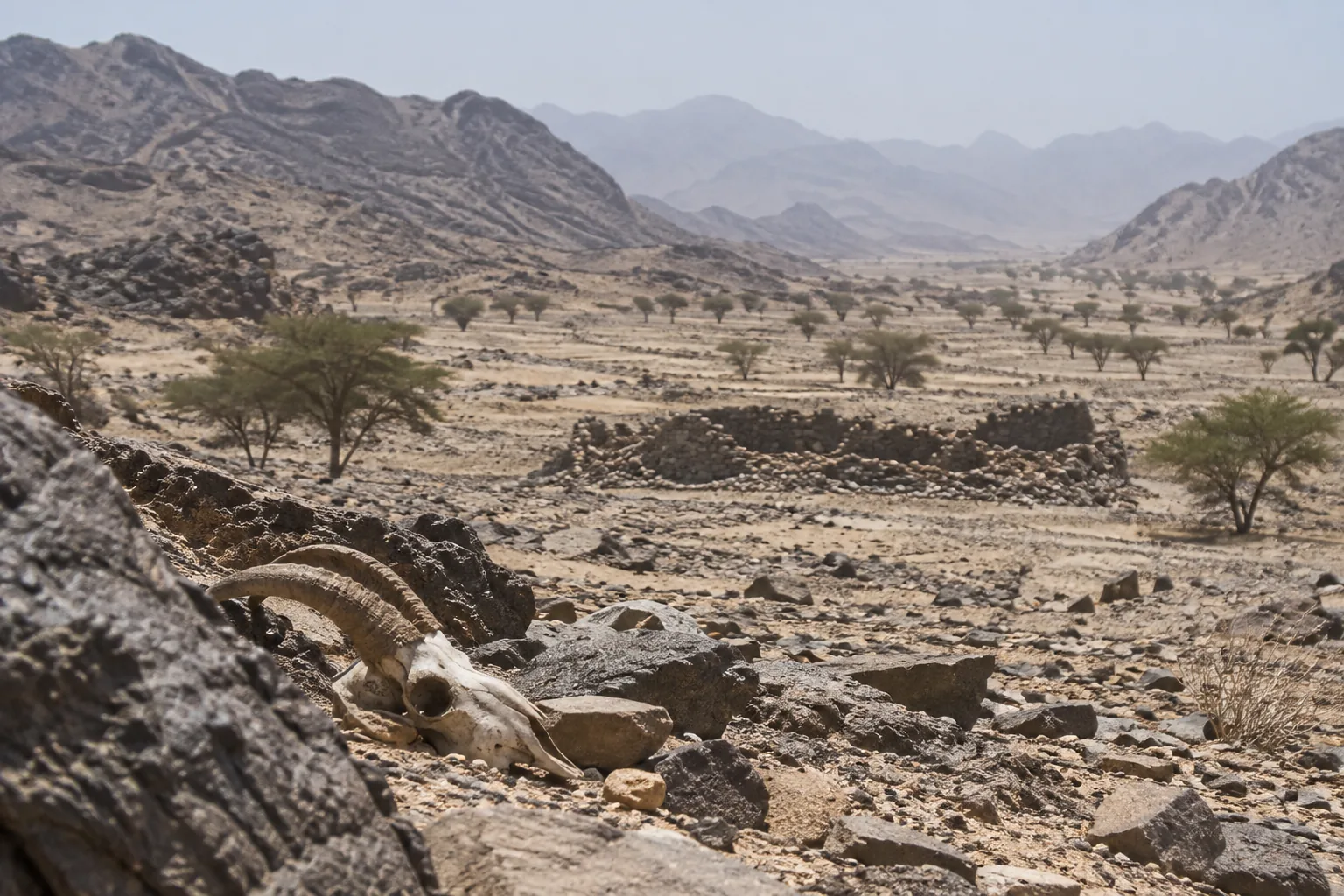
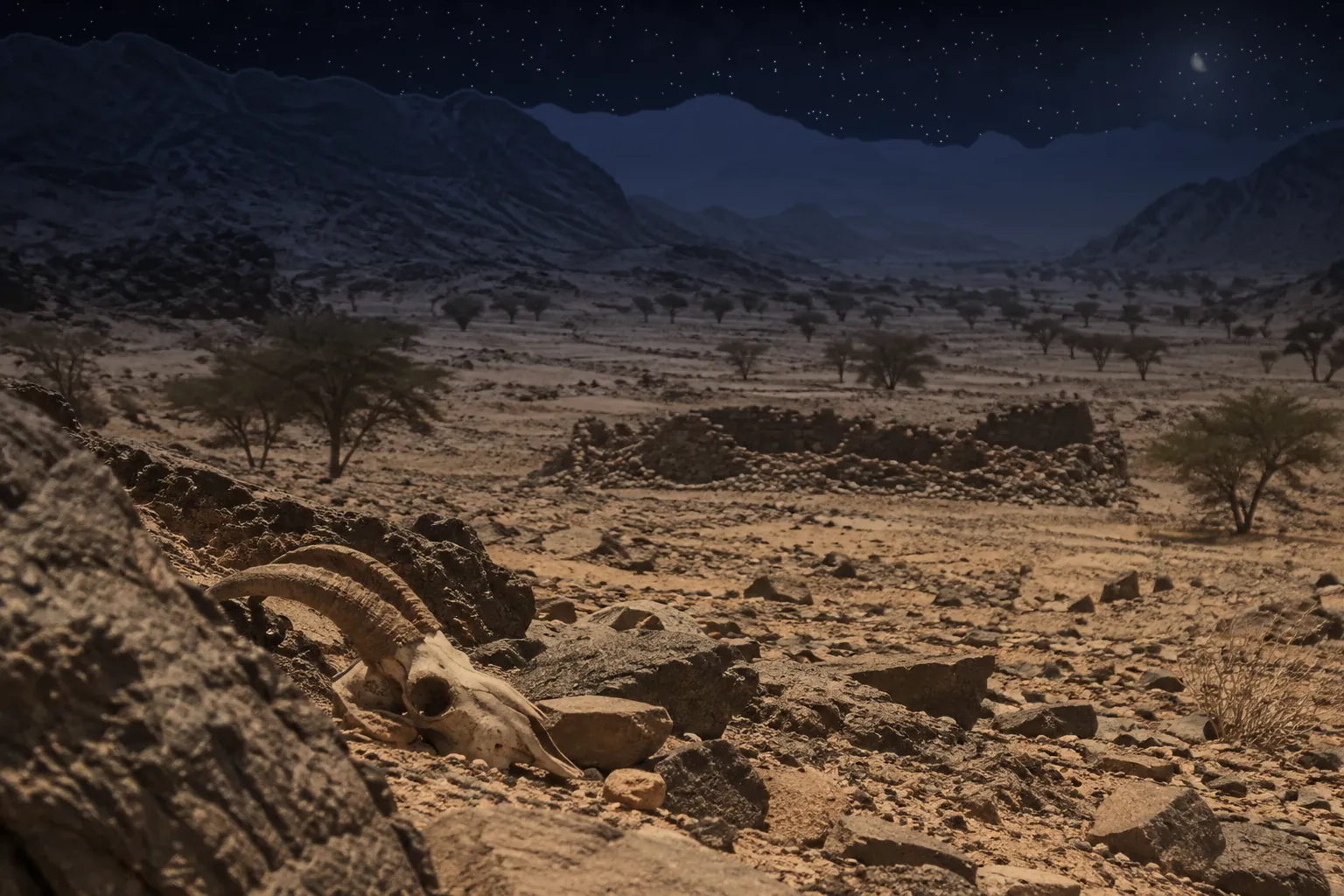
A wide, silent valley: an abandoned stone enclosure and an ibex skull bleached by the sun. What made the leopard disappear? Vanishing prey, shrinking habitat, and conflict with people.
FactListed as critically endangered since 1996, with an estimated hundred left in the wild.
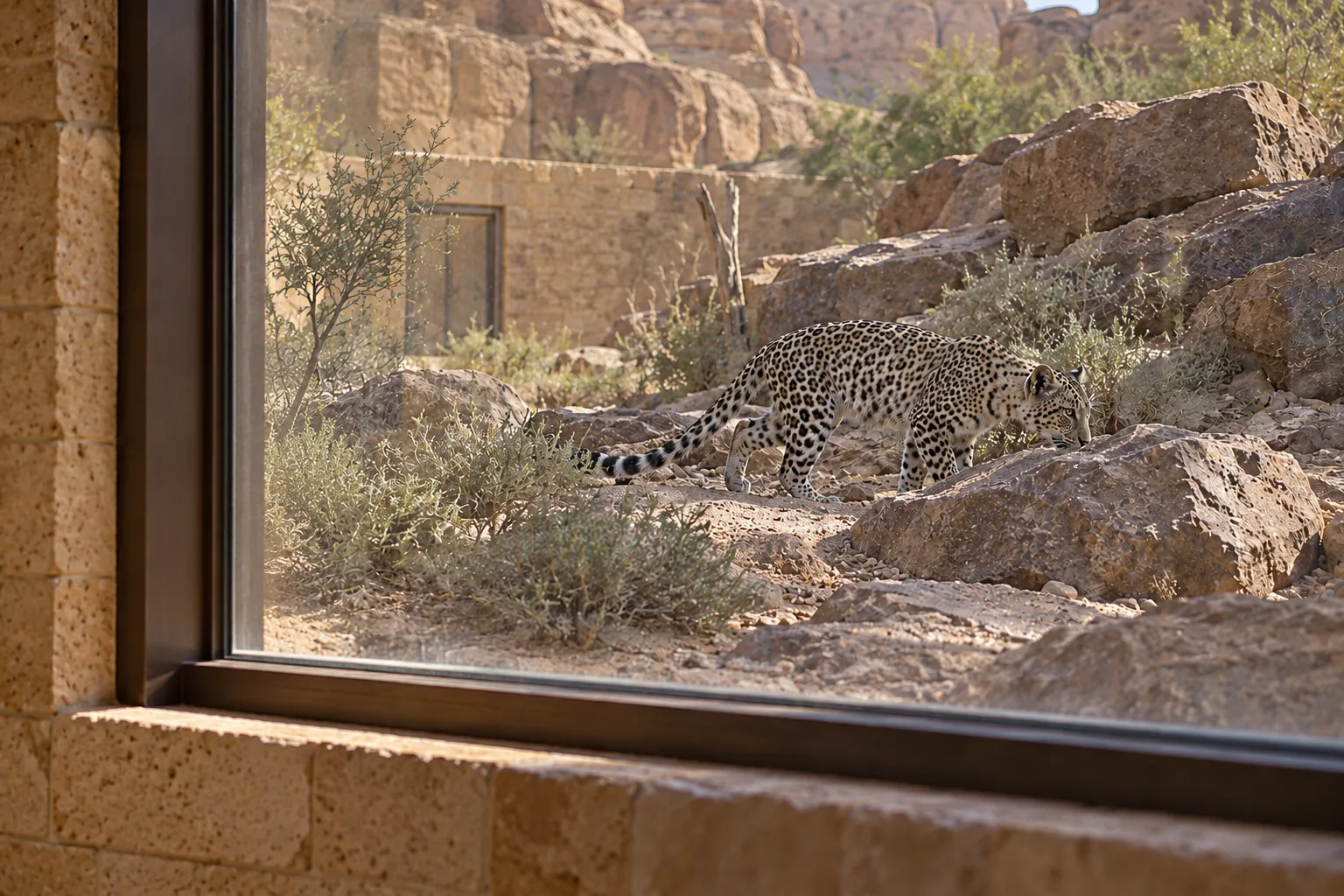
Vets, reserve rangers and camera traps on the rocks: quiet work happening today to bring it back.
FactThe breeding programme held 32 leopards as of December 2024, and the centre was accredited by the European Association of Zoos and Aquaria in January 2025.
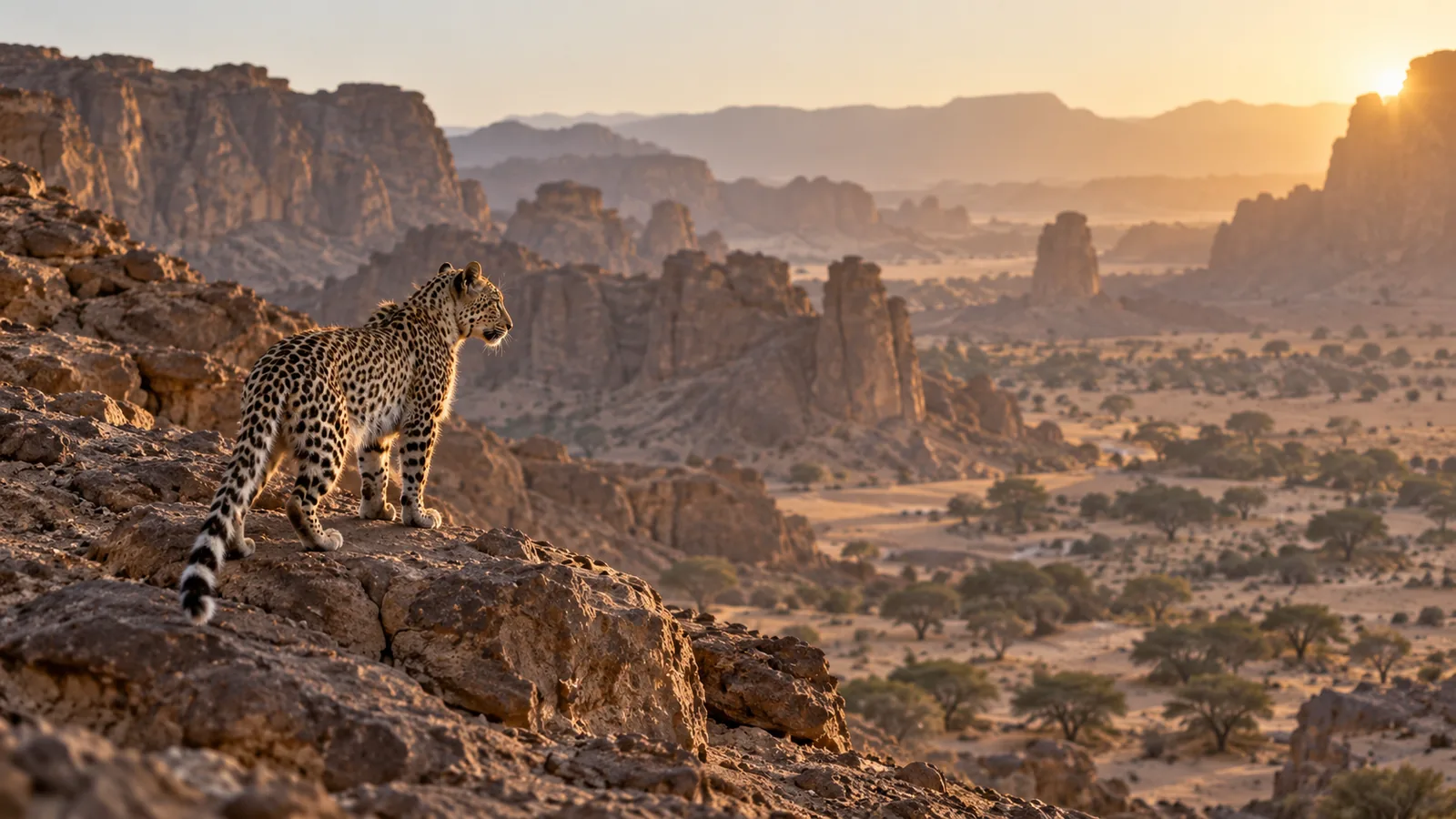
Sharaan’s cliffs glow at sunset, and a leopard stands on the edge looking over the valley. A scene that has not happened yet, made so we can see it before it does.
Fact10 February is the International Day of the Arabian Leopard.
Species card
The Arabian leopard is one of the rarest animals on earth, and every attempt to chase it with cameras, cars and drones disturbs it in the last habitats it has left. So we rebuilt its world with AI from published studies, without setting foot in its range or approaching a single animal.
Interactive
This is how scientists look for animals at night: they sweep the mountain with a torch, and eyes shine back wherever the light falls. Take the torch, search this valley for its residents, and photograph every pair of eyes that shines. Nine live here, and one of them is so rare you may never find it.
وَلي دونَكُم أَهلَونَ: سِيدٌ عَمَلَّسٌ … وَأَرقَطُ زُهلولٌ وَعَرفاءُ جَيأَلُ
“I have other kin than you: a swift wolf,
a sleek spotted leopard, and a maned hyena.”
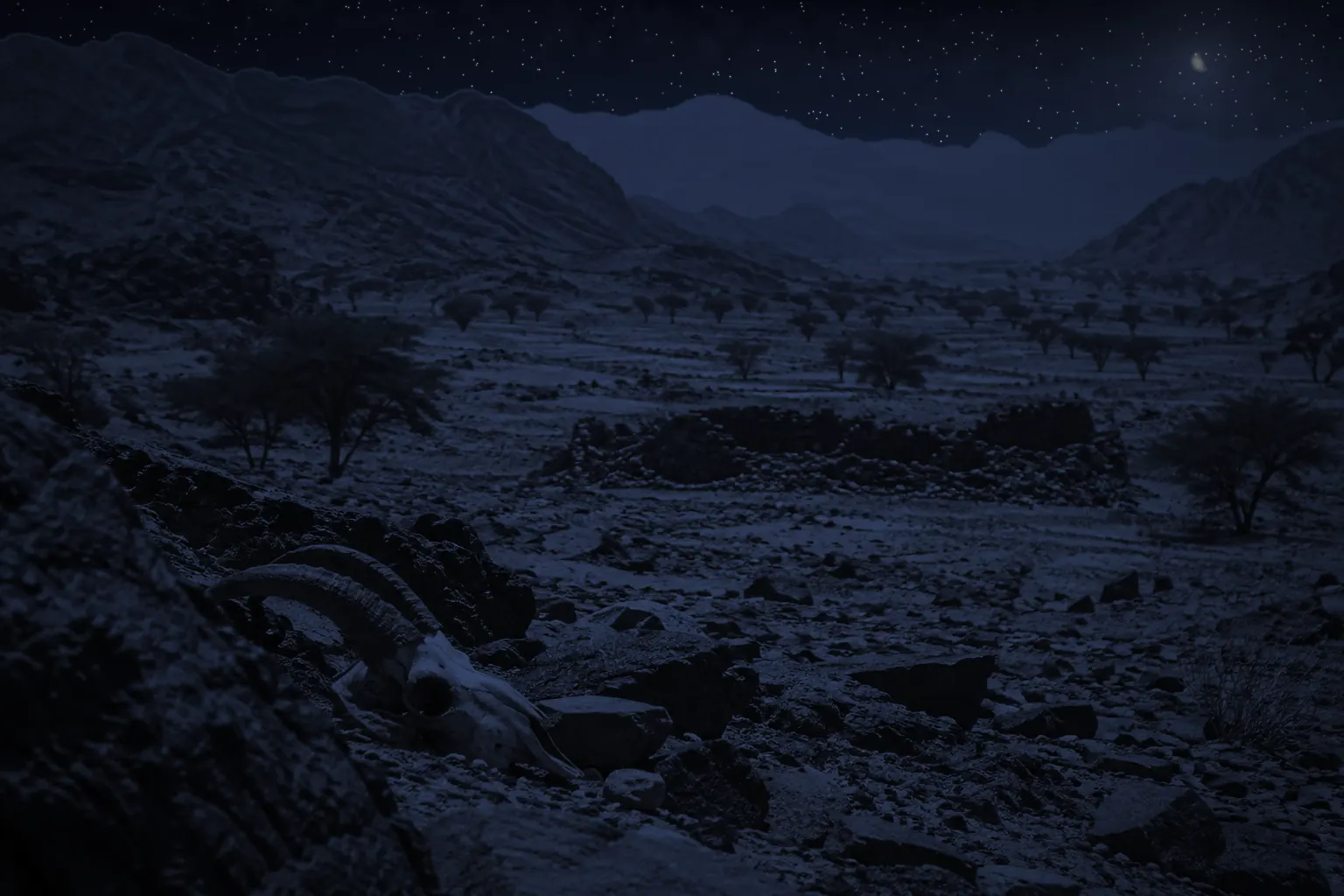
9 p.m.
The valley is dark, but it is not empty.
Move it with your mouse, your finger or the arrow keys.
Procavia capensis
Arabic dictionaries call it beautiful-eyed and exceedingly shy. It lives in cracks in the rock.
Capra nubiana
In Arabic its female is called al-urwiyya, and it climbs where nothing else can.
Vulpes
The Arabs gave it the kunya Abu al-Husayn.
Bubo ascalaphus
In Arabic its male is called al-sada, “the echo”.
Hyaena hyaena
The Arabs called it Umm Amir.
Canis lupus arabs
The Arabs gave it the kunya Abu Ja’da.
Oryx leucoryx
Arab poets praised beautiful eyes by comparing them to hers.
Uromastyx aegyptia
The Arabs nicknamed it Abu Hisl, and claimed it never drinks water.
Panthera pardus nimr
It was here all night.
You never noticed it, and that is its art: to see without being seen. Only about a hundred remain in the wild, which is why we made this film: so it can be seen before it is gone.
Sources: Lisan al-Arab (Ibn Manzur); al-Muhkam (Ibn Sida); al-Muzhir (al-Suyuti); al-Muhit fi al-Lugha (al-Sahib ibn Abbad); Nur al-Qabas (al-Yaghmuri); Lamiyyat al-Arab (al-Shanfara); the Mu’allaqa of al-A’sha; Banks et al., Science Advances, 2015 (pupil shapes); Al Hikmani & Al Hikmani, Oryx, 2024 (Arabian leopards in Dhofar). The scene is a still from the film regraded to look like night; the eyes are illustrations.
The leopard in the Arabic language
It left its mark on our clothes, our proverbs and our family names. This film tries to bring that memory back along with the animal itself.
نَمِر
The name
From numra, a spot of one colour set against another. The leopard was named for the spots on its coat.
النَّمِرة
The garment
A woollen cloak striped in black and white, worn by the Bedouin and named after the leopard for its pattern. The Companion Mus‘ab ibn ‘Umayr was shrouded in a namira after the battle of Uhud.
تنمّر
The verb
To tanammar means to turn hostile and threatening, “because the leopard is only ever met in anger.” The Arabs said of a man who showed his enmity: “he put on the leopard’s skin.”
بنو نمير
Lineage
Arab tribes carried its name, among them Banu Numayr and al-Namir ibn Qasit, and Nimr is still a familiar name across the Peninsula.
We are not only bringing an animal back to the mountain, but a word back to its language.
Sources: Lisan al-Arab by Ibn Manzur, root (n-m-r); Sahih al-Bukhari, Book of Funerals.
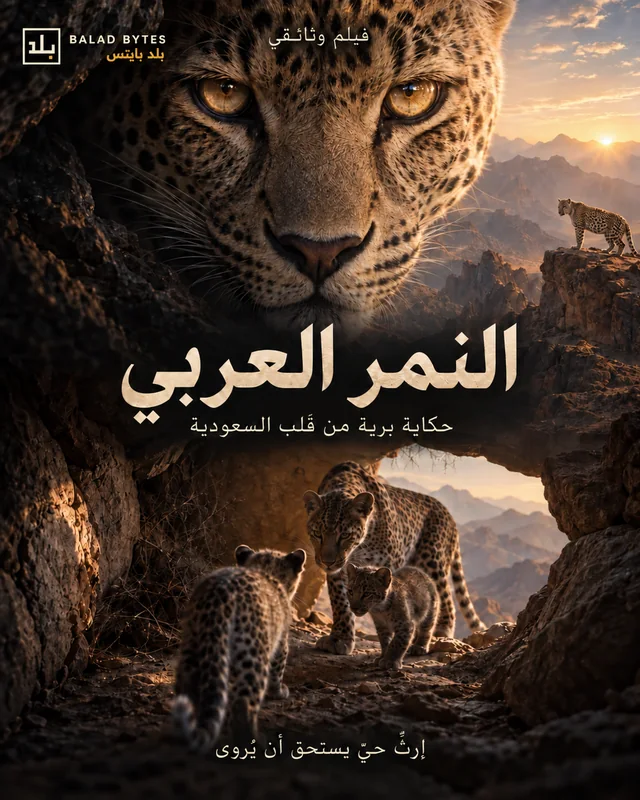
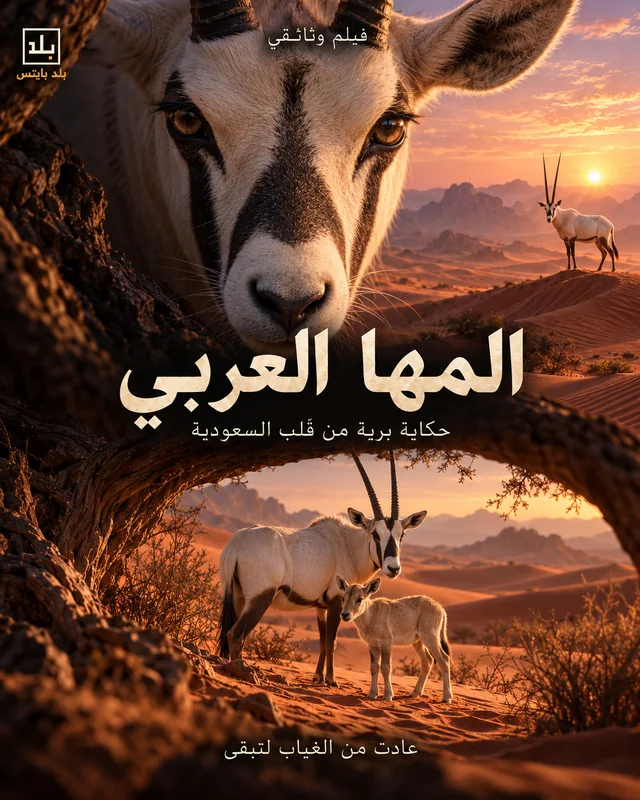
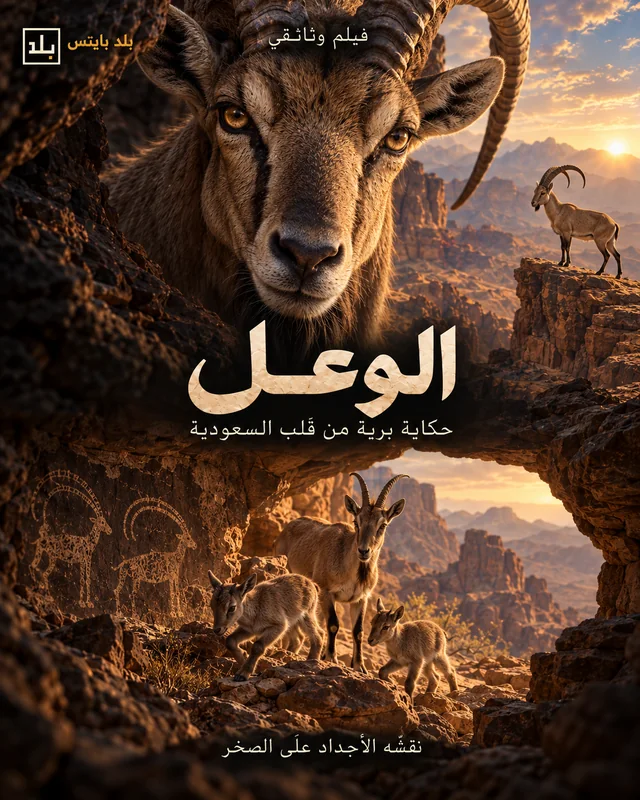
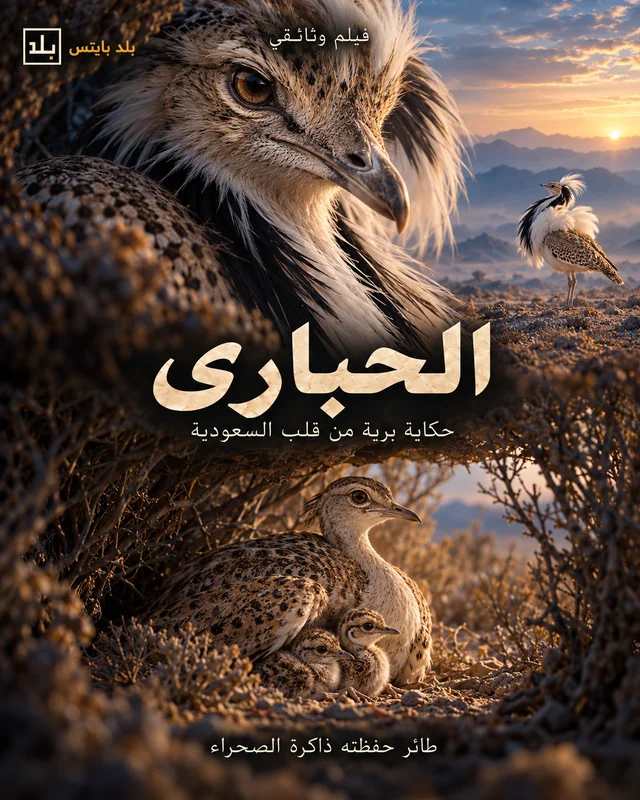
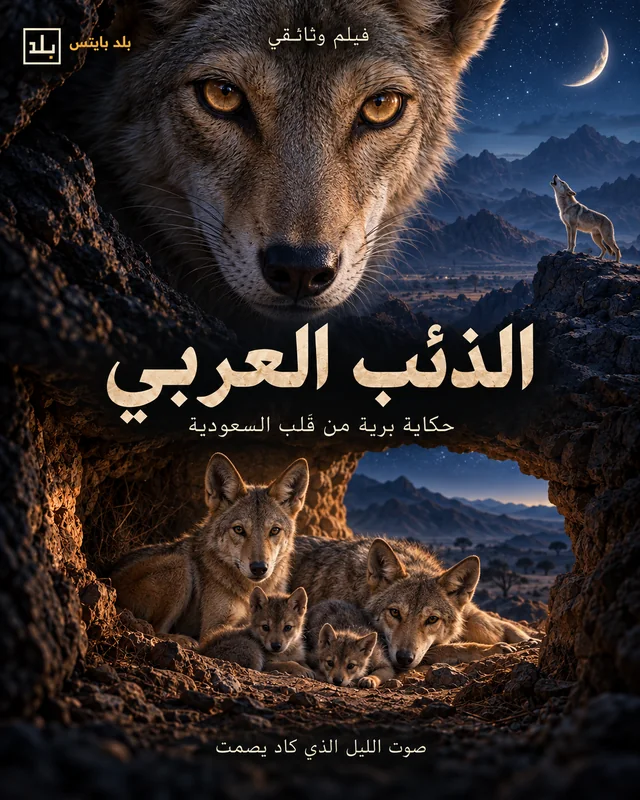
The Arabian Leopard is its first episode. Each episode follows a Saudi species close to disappearing, and rebuilds its world before it becomes a picture in a book.
Tell us in two lines. We'll send you an idea and a quote within 48 hours.